BOOK 1
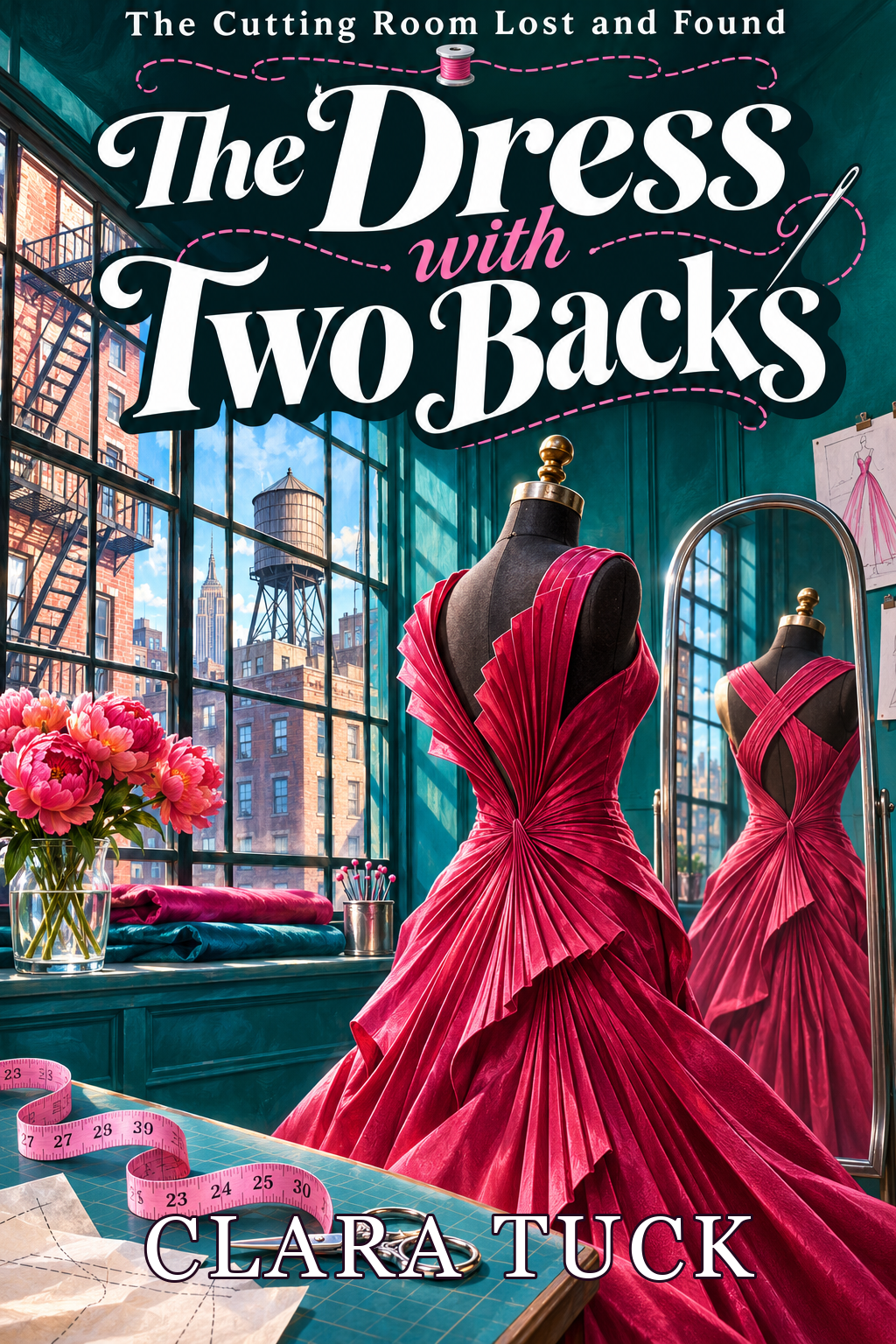
The Dress with Two Backs
The Cutting Room Lost and Found
The gown arrived with a fan of pleats. By three o’clock, its back tells a different story.
Inez Barral signs for the Swan Gown with careful hands. The celebrated 1958 stage dress is the centrepiece of Spindle Street School of Fashion’s autumn exhibition, and its formidable lender, Vivian Pask, expects her father’s legacy to be treated accordingly.
Hours later, a photograph reveals an impossible discrepancy. The dress in the sealed case has the right front—and the wrong back. The distinctive pleats Inez saw on arrival have vanished.
Vivian refuses a public scandal. The opening will go ahead, and Inez has until Monday’s insurance inspection to put things right. With Gloria Kent checking movements through the building, Inez follows the evidence through loan records, photographs and the memories of the people who made the clothes.
But the missing gown is only part of the problem. Behind one famous name lies work that somebody would rather leave uncredited. Can Inez find the dress without overlooking the hands that gave it its shape?
Read the opening ↘A FIRST LOOK INSIDE
Chapter One
The label proof for the Swan Gown came up from the printer’s on Thursday morning at nine, in a stiff brown envelope, and Inez Barral opened it at the lending counter with a letter knife that lived, for reasons nobody had ever explained to her, in the drawer marked GLOVES.
It was a beautiful label, printed on heavy ivory card in a typeface with long, elegant serifs, and it said:
THE SWAN GOWN Midnight at the Majestic, 1958 LEONARD PASK Silk faille, silk organza On loan from the Pask family
That was all. Somebody had already been at it in pencil. In the margin, beside LEONARD PASK, was a small, neat question mark.
“That’s Ruth,” said Kit, leaning over the counter with a coffee in each hand and their phone held between two fingers of the right one, which still looked to Inez like a thing that should not be possible. Kit studied in the evening program, picked up retail shifts when they could get them and dressed the school’s street window as if the whole of Spindle Street were about to walk past it. “She’s been question-marking that label for a month.”
“Why?”
“Ask her. She’ll tell you for forty minutes.” Kit put a coffee on the counter. The lid said, in grease pencil, INEZ: TEA (UNDER PROTEST). “Marisol says that’s your second today and your last. She says you’ve had six weeks to get used to coffee and she’s giving up.”
“Thank you, Marisol,” said Inez, to the lid.
End of excerpt